


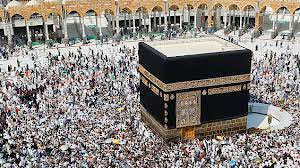
Hajj is a mass gathering event that takes place annually in Makkah, Saudi Arabia. Typically, around three million people participate in the event and perform rituals that involve movement within strict space and time restrictions.
Despite efforts by the Hajj organizers, such massive crowd gatherings and movement causes overcrowding problems at the Hajj sites.There are are two important rituals that are performed by all the pilgrims at the same venue on the same day - Tawaf, followed by Sayee. Several previous simulation studies on Hajj have focused on the rituals individually. This paper studies both events jointly, rather than separately. Using ExtendSim, the authors integrate the Tawaf and Sayee rituals into one model. The validated model was applied to a wide range of scenarios where different percentages of pilgrims were allocated to the various Tawaf and Sayee areas. The effect of such allocations on the time to complete Tawaf and Sayee indicate strategies for managing these two key Hajj rituals.