


With the development of smart grid technology and the increase of the global resident Plug-In Electric Vehicle (PEV) market in the near future, the interaction between limited distribution grid capacity and uncontrollable PEV charging loads can lead to violations of local grid restrictions.
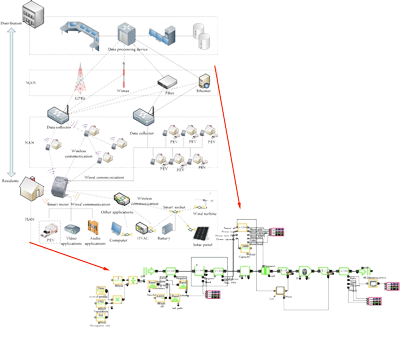
And the proper model charging scheduling mechanism is the key to assess and satisfy various resident charging requirements to help in optimizing utility utilization. In this paper, the distribution grid profile model with PEV charging power is firstly constructed for the purpose of studying resident PEV charging impact on the distribution grid. To better reflect the actual impact of PEVs, real data on driving behaviors, vehicle characteristics, and electricity loads were used to generate the model. Furthermore, an improved queuing-theory-based scheduling mechanism is proposed, the distribution grid communication structure and the algorithm are illustrated, and computer simulations are demonstrated to verify their performance. Results show that the proposed scheduling mechanism will enhance the distribution grid flexibility to meet various charging requirements while maximizing grid capacity.