
In the search for better methods to understand healthcare systems and develop solid, credible, evidence-based answers to complex questions, mathematical modeling has stepped up to the challenge.
Simulation gives healthcare professionals the freedom to make mistakes and to learn from them without the need for intervention by experts to stop patient harm. By seeing the outcome of their mistakes, learners gain powerful insight into the consequences of their actions and the need to “get it right”.


Nanotechnology
A research team at the University of Southern California developed a system that models nanoscale drug delivery through the bloodstream. It simulates the flow of nanorobots through the bloodstream until they detect cancer cells, at which point they maneuver to the tumor and begin the process of drug delivery. This topic is impractical to test for in the lab, due to the difficulty of introducing different planes of different materials to a human immune system without endangering anyone in the process.
Pandemic
Response Planning
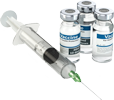
How could we expedite vaccination distribution to protect society if there’s a pandemic? In a February 2017 report published in the Disaster Medicine and Public Health Preparedness journal, ExtendSim was used to quantify the potential of integrating retail pharmacies into pandemic vaccine response planning. Model results indicated the weekly national vaccine administration capacity increased to 25 million doses per week supporting efforts to achieve a projected 80% vaccination coverage of a single dose of vaccine per person when retail pharmacies are integrated into pandemic vaccine response planning.

Healthcare
in Prisons
California Department of Corrections and Rehabilitation (CDCR) houses over 170,000 inmates in 33 adult prisons so it can be challenging to provide timely access to healthcare services while ensuring the safety of staff and inmates. Using ExtendSim, a prison medical program was modeled addressing the full continuum of healthcare services. After running over 350 different scenarios, five specific recommendations were made that improved the percent of inmates completing medical processing within six hours from 36% to 91% achieving the goals of the CDCR.

Clinic
Redesign
Using ExtendSim, a consultant was able to save their client approximately $415,000 annually by streamlining their processes and staffing requirements as well as proposing a redesign of their outpatient clinic. By identifying the best use of excess capacity, over $2.5M in additional revenues were recognized. Plus, the ExtendSim model showed the new clinic could accommodate up to 30% more patients, adding $1.5M in new services.
ExtendSim in Healthcare
 Design and planning of emergency departments.
- Test new procedures and dosage requirements for dangerous drugs and help manage chronic diseases.
- Healthcare informatics and diagnostics.
- Drug delivery.
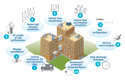 Evaluate current and proposed processes to improve patient flow, reduce costs, and increase patient satisfaction.
- Innovate new ways and means of comprehensive healthcare.
- Pharma solutions.
- Optimize flow patterns and capacity utilization when building new or extended facilities.
- Recommend changes to corporate standards regarding staff levels and panel sizes.
- Resource prioritization and allocation in the short and long term when faced with projected increases in clients and the need to expand without over-expanding.
- Telephone answering for a large medical practice.
- Dementia strategy.
- Simulation of the function and operation of neural networks.
- Acute and psychiatric hospital bed provision.
- Clinical trial designs.
Who is Using ExtendSim
 ExtendSim was used for a landmark healthcare study in which two major healthcare organizations used RFID to track nurses at 38 hospitals across the country. The goal of the study was to analyze and find ways to improve nurses' time with patients at the bedside on medical and surgical floors. The principal investigator planned to demonstrate, through simulation modeling of existing data if the nursing care process and/or the physical space could be improved.
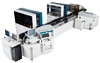 Major medical equipment producer of laboratory automation equipment built ExtendSim models that allow its sales force to customize equipment for customers, increasing the rate of sales success. Then, the customer can use these same models to replicate their operations and explore opportunities to improve testing processes in lab analysis.
 Students from the Tippie Analytics Cooperative worked with massive amounts of patient encounter data to reveal bottlenecks and opportunities as patients arrive and flow through the multiple engagements that constitute an appointment at the University of Iowa Hospitals and Clinics. These insights will help UIHC improve the patient experience by driving operational efficiencies, optimizing staffing, and streamlining patient visits.
- Demand and capacity planning for an Intensive Care Unit examined patient flow pathways in a care unit (Definite MI, Suspected MI, LVF, and Arrhythmia) to investigate the impact of bed blockages in the medical ward on the ability of the unit to deliver its specialized care.
 Modeling perioperative systems in a hospital - Utilizing data from a study containing a large dataset (90,000+ records of 30,000+ patients) culled from hospital patient logs and electronic data collection systems, ExtendSim was used to evaluate alternate process flows, policies, staffing, and resource allocation, for the cases flowing through a renovated space. This level of fidelity increased team buy-in and increased certainty that savings estimates would be real, providing an accurate understanding of resource allocation as it relates to revenue. The effort’s positive outcome showed the importance of involving nursing staff and facility administration with the healthcare planning, architecture, and simulation modeling team. The result is improved patient care and patient flow with better use of personnel and other resources.
 ExtendSim was used to support the operational and functional design of a new national distribution center for the leading pharmaceuticals distributor in Argentina (more that 150 million units per year, at a value of $1 billion). This operation stands out for its level of innovation and aggressive use of simulation technology in support of order picking operations and routing of orders.
 Feasibility model of North Hampshire Hospital's Emergency Assessment Centre in the United Kingdom evaluated staffing requirements, beds, number of cubicles, overall size of the facilities, and future growth. Surveyors and engineers used model results to plan the facility.
- A high level model of mental health services, including 10 hospitals, is being developed.
- Analysis of staffing levels at a refugee camp in Croatia.
- Models of hospital and emergency medical services throughout a major USA county.
- Selection of categorical surgical residents at a major teaching hospital.
- Selection of categorical surgical residents at a major teaching hospital.
- Evaluation of biomedical research award applications in a major university in the health sciences.
- Modeling of hearing instrument production.
Case Studies


Improving surgical service delivery
This thesis explored how to reduce surgery cancellations and improve operating room (OR) efficiency in hospitals.

Assessing Hospital System Resilience to Disaster Events involving Physical Damage and Demand Surge
This paper investigates the effectiveness of formalized collaboration strategies through which patients can be transferred and resources, including staff, equipment and supplies, can be shared...

Pharmaceutical Production Line Optimization
Discrete event simulation is one of the key technologies to assist in the development of a flexible and agile production system in this Industry 4.0 era. An ExtendSim model was built for an...

Overcoming Challenges in Hybrid Simulation Design and Experiment
This study builds on earlier research which focuses on the use of combined simulation methods to support healthcare demand predictions. The authors developed a hybrid simulation model composed of...

Using Simulation and Optimization in Complex Manufacturing Operations
This presentation outlines the story of a Medical Device Fortune 500 company’s experience in implementing a combined simulation and optimization solution not integrated to the primary ERP system of...


 Learn More